 Haley Hawbaker
There comes a point when “the way we’ve always done it” starts costing more than it saves.
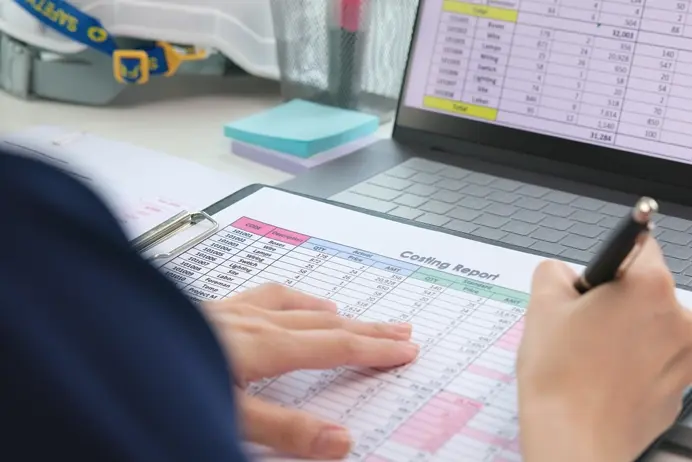
For Keener Electric Motors, that point looked like long days, stacks of paperwork, handwritten notes, and too much time spent searching for information that should have been easy to find. Owner Bill Weidman was regularly working 13- and 14-hour days, six days a week, and much of that time was being consumed by manual administrative work.
The need for a different system was becoming clear. They needed something that would cut down Bill’s administrative load and also build scalable processes with. Something like ERP.
Read also: 6 Telltale signs it's time to upgrade to ERP
But replacing decades-old manual systems with ERP is not a small change, especially for a small business where there is little extra capacity to absorb disruption. Much of the business still ran on paper and fax, and many of the processes that would eventually live in an ERP had never been formally documented in the first place. That meant implementation carried a real risk: while the team was trying to build a better way to operate, the business still had to keep running.
When Bill's wife, Gretchen Weidman, retired from her corporate career and became more involved at Keener, she took on the challenge of spear-heading the company’s ERP implementation. She reached out to Koble.
Starting With the Business, Not the Software
“Everything needed to be developed,” Gretchen explained. “A new process for everything needed to be created.” That meant implementation could not simply be a matter of configuring software and teaching employees where to click.
Luke, one of Koble’s Consultants, worked closely with Gretchen to understand how Keener actually operated and help turn those practices into repeatable workflows in Koble’s EBMS. Some of those needs were highly specific.
Keener stores inventory belonging to one of its motor distributors, which required the team to develop a way to track that inventory without treating it as Keener-owned stock. Its repair work also required work orders that could accommodate the different information technicians need when servicing pumps, motors, and other equipment. Koble worked through those requirements with Keener, testing different approaches until the workflows fit the business.
For Gretchen, that willingness to work through the details stood out.
“We really bent the software to accommodate what we actually needed,” she said. “That was huge with your implementation team. I cannot even explain how much they helped to do this.”
Learning a New Business and a New ERP at the Same Time
Gretchen was uniquely prepared for an ERP implementation.
Before retiring, she had spent years working in learning and development at a large corporation and had managed software implementation projects herself. She understood implementation timelines, training, software rollouts, and what a good vendor relationship should look like.
So she came into the EBMS project with experience and high expectations.
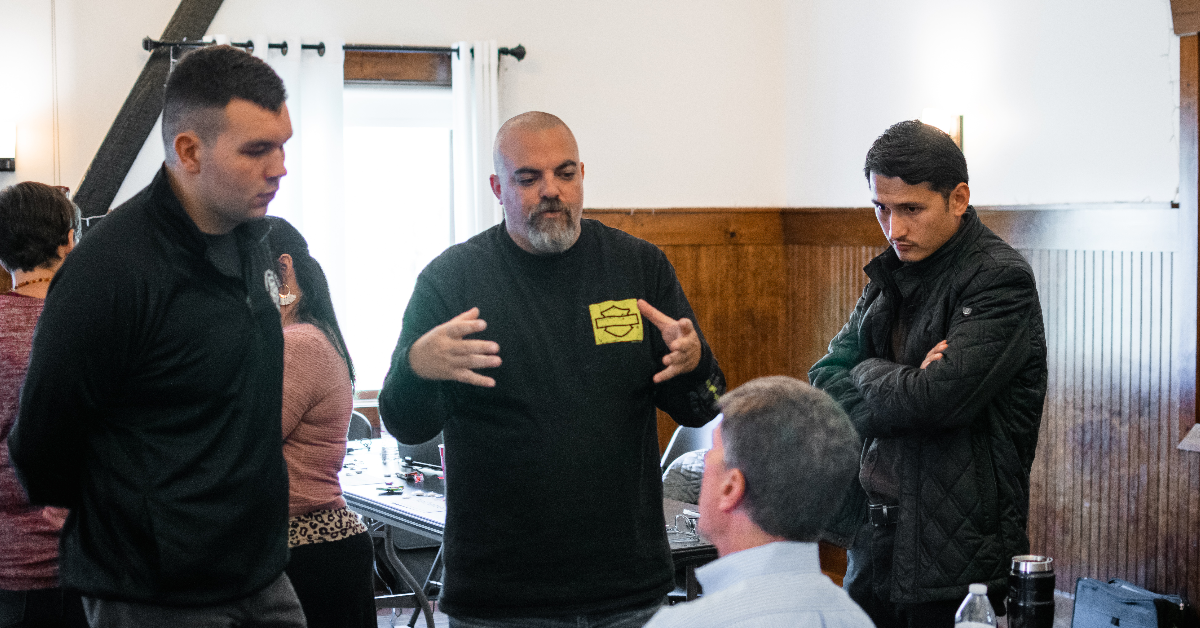
The problem was, Gretchen was new to Keener. She needed to simultaneously learn the electric motor business from her husband Bill while learning EBMS from Koble. She would sit down with Bill to understand how Keener handled a particular process, then take that information to Luke and the rest of her Koble team to work through how it should function in EBMS.
“I really relied heavily on my implementation team,” she said, “and they were above and beyond.”
The training became a collaborative process. Luke set up a sandbox where the Keener team could practice before going live. Gretchen worked through the system with him in what she described as a “train the trainer” approach, then helped Bill and Keener’s office staff learn the new workflows. Recorded sessions and shorter training resources gave employees additional opportunities to practice what they were learning.
Koble team members Dorothy and Mary Lou worked with Keener through the accounting processes all the way through reconciliation, while Isaac, another Koble consultant, was physically at Keener’s office on the day the company went live. For Gretchen, implementation never felt like being handed a finished system and left to figure out the rest.
Then the Unexpected Happened
The value of that relationship became even clearer a few weeks later.
Keener suddenly lost the office employee who had been responsible for many of the company’s day-to-day administrative and accounting tasks. Gretchen had sat in on those trainings, but she had not been the person actually performing much of that work. Suddenly, she was responsible for it.
It was Monday morning. Before the week was out, Gretchen needed to know how to process invoices, print checks, make vendor payments, and complete payroll so Keener could keep operating normally.
She sent an email to Gregg, her Koble Account Manager, explaining what had happened. By 2:00 that afternoon, Gregg and Luke were on a call with her.
“Everyone showed up,” Gretchen said. “It was so impressive and so above and beyond what needed to happen.”
Luke stayed on after the meeting and spent another hour and a half walking Gretchen through what she needed to know. The next day, they spent another hour and a half helping her work through vendor payments. A few days later, Mary Lou spent nearly three hours with her covering additional processes.
By Friday, Gretchen had completed everything that needed to be done.
A Different Kind of Software Relationship
ERP implementations are often discussed in terms of data conversions, configurations, timelines, and go-live dates. Those things matter.
But for a small business, an implementation is also a major organizational change. Employees are learning new processes while continuing to serve customers. Owners are making decisions about how the company should operate in the future while still handling everything that needs their attention today.
And sometimes, something happens that was never part of the implementation plan. That is when the people behind the software matter.
“I had a very high expectation that was 100% met for me,” she said. “When you hear software, all you hear is tech, tech, tech; but I feel like I really developed relationships. It was a human experience within a business exchange.”
And, she added, “I felt seen. I felt heard.”
Keener is still early in its journey with EBMS. Gretchen describes what they have accomplished so far as “phase one”: moving away from paper and fax, establishing new processes, and giving the business a foundation it can continue building on. There will be more to learn and more processes to improve.
But Keener knows they will not have to figure it out alone.
As Gretchen put it after working with Koble’s implementation team: “I know I’ll be well taken care of.”
--
ERP is a big change. The right partner can make it a manageable one.
Talk with Koble about your next step.